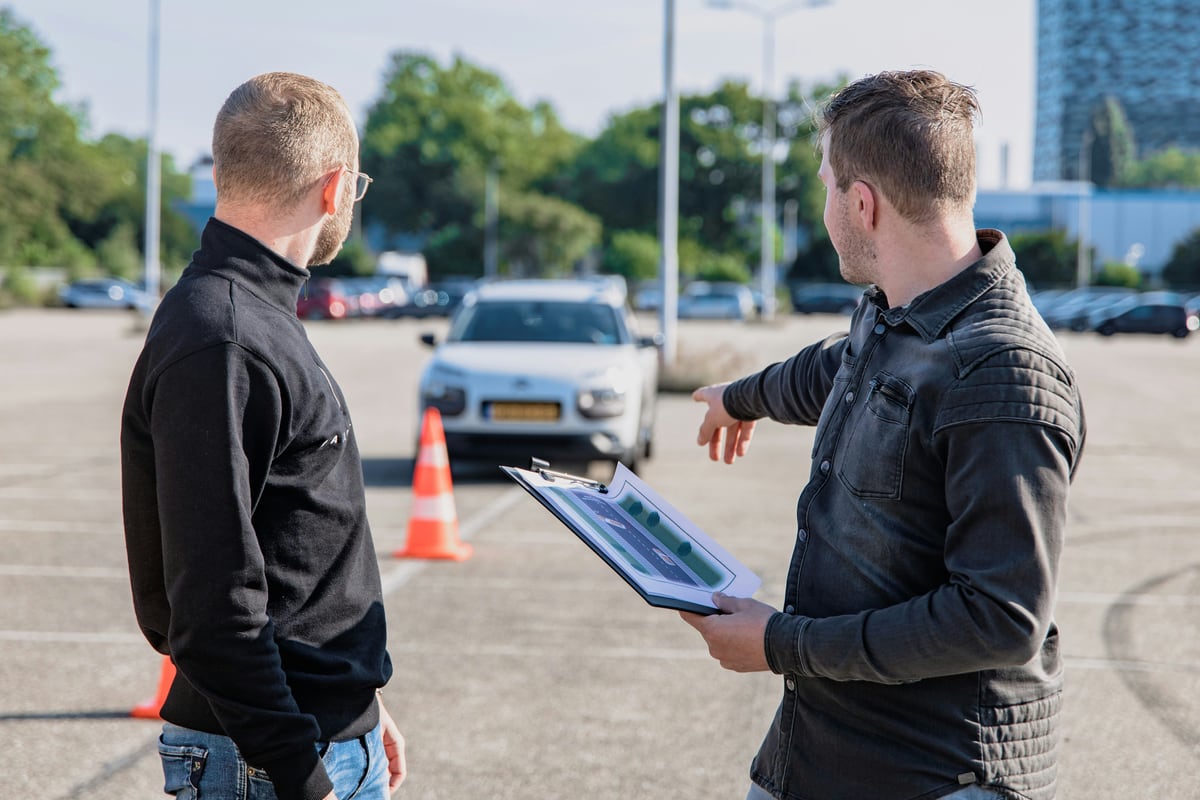
A pre-purchase inspection is where confidence is either earned or lost. Done casually, it reassures without revealing, a glance under the bonnet, a turn of the key, a nod. Done to a protocol, it is one of the most valuable safeguards a buyer can commission. The difference is not the inspector's intuition but the discipline of the method. This article sets out the structured approach we advocate, in the order a thorough assessment should follow.
Start with the certified history
An inspection should never begin blind. The certified report tells the inspector where to look: a previous write-off draws attention to structural repair, a finance marker raises a question of title, an import event points to documentation that needs verifying. Knowing the history turns a general check into a targeted one.
This is why the report comes first in the protocol rather than last. An inspector armed with the documented past spends their time confirming or challenging specific findings, not searching in the dark.
Documents before metal
Confirm identity first. The VIN on the vehicle must match the windscreen, the pillar plate and every document. A specification that does not agree with the official record is a finding in itself, before a single panel is examined.
Identity checks are quick, decisive and frequently overlooked in the rush to drive the car. Yet a vehicle whose papers do not align with its VIN should never reach the physical stage of the inspection at all, because nothing found there can be trusted to belong to it.
The physical assessment
With identity and history established, the hands-on assessment proceeds methodically rather than impressionistically.
- Structural integrity and evidence of prior repair, including paint and panel alignment.
- Drivetrain operation under load, not just at idle, where many faults stay hidden.
- Electronics and safety systems checked through diagnostics, not assumption.
- Tyre and brake wear consistent with the stated mileage and use.
Mileage in context
Recorded mileage means little until it is set against wear. Pedals, seats, the steering wheel and the controls tell their own story, and an interior that looks far older or younger than the odometer suggests is a warning. Where the physical evidence contradicts the figure on the dash, the certified report's mileage timeline becomes decisive, because a sequence of dated readings is far harder to falsify than a single number.
An odometer is a claim. A timeline of sourced readings, checked against physical wear, is closer to proof.
A documented verdict
The protocol ends as the report does: with a clear, accountable verdict you can act on. A premium inspection is not theatre and not reassurance for its own sake. It is method, documented at every step, so that the decision to buy, to negotiate or to walk away rests on findings rather than on a feeling.
That documentation also has a life beyond the moment of purchase. It supports any future resale and stands as a record of the condition the vehicle was in when you took it on.
Where a protocol prevents costly mistakes
The value of working to a protocol is clearest in the faults a casual inspection misses. A repainted panel that betrays an unrecorded repair, a diagnostic fault stored quietly in a control unit, brake wear that contradicts a low odometer reading, these are precisely the findings that an unstructured glance overlooks and a methodical one catches. Each, left undiscovered, becomes the buyer's expense rather than the seller's.
A protocol also protects against the opposite error: dismissing a sound vehicle over a cosmetic blemish. By assessing each system against the documented history and the recorded mileage, the inspection separates the trivial from the significant, so a buyer neither overpays for a hidden problem nor walks away from a good car for the wrong reason.
An inspection without a method finds what it happens to notice. An inspection with one finds what matters.
Commissioning the history that anchors it
Because the protocol begins with the certified history, having one ready is the practical first step. A 2-day trial for €3.99, then €49.99/month with automatic renewal and the freedom to cancel at any time, makes the report that anchors a proper inspection available whenever a vehicle is worth assessing seriously, and it stands behind the Autocertif guarantee.